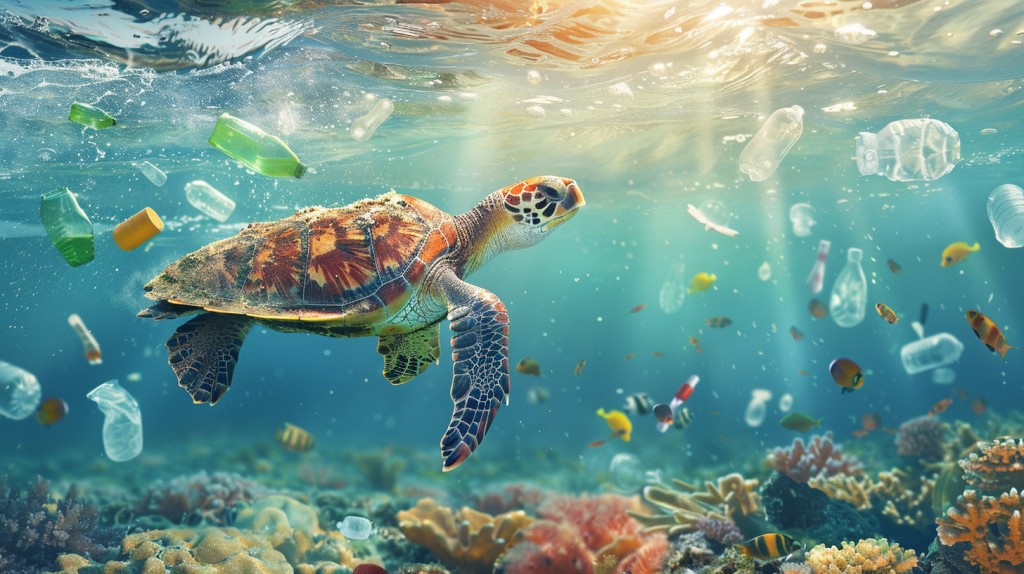
Every year, millions of plastic bottles, bags, and toys end up in our oceans. Scientists warn that this invisible problem is growing—and it could affect all of us.
Some of the plastic trash we throw away flows through rivers and into the sea. There, sunlight and waves break large items into pieces as tiny as grains of sand. These are called microplastics.
The problem is that sea creatures mistake these tiny plastics for food. Fish may swallow them, thinking they are plankton. This makes the animals sick—and the plastic does not go away.
A more significant concern is that these plastics can accumulate in the food chain. Small fish are eaten by bigger fish, and those fish can end up on our dinner plates. That means microplastics can accumulate inside our bodies as well.
Plastic is useful, but it can hurt both the ocean and us. Experts say that even small changes—like using fewer plastic bags—can help keep the sea clean and healthy.
What is one simple step you could take this week to use less plastic?